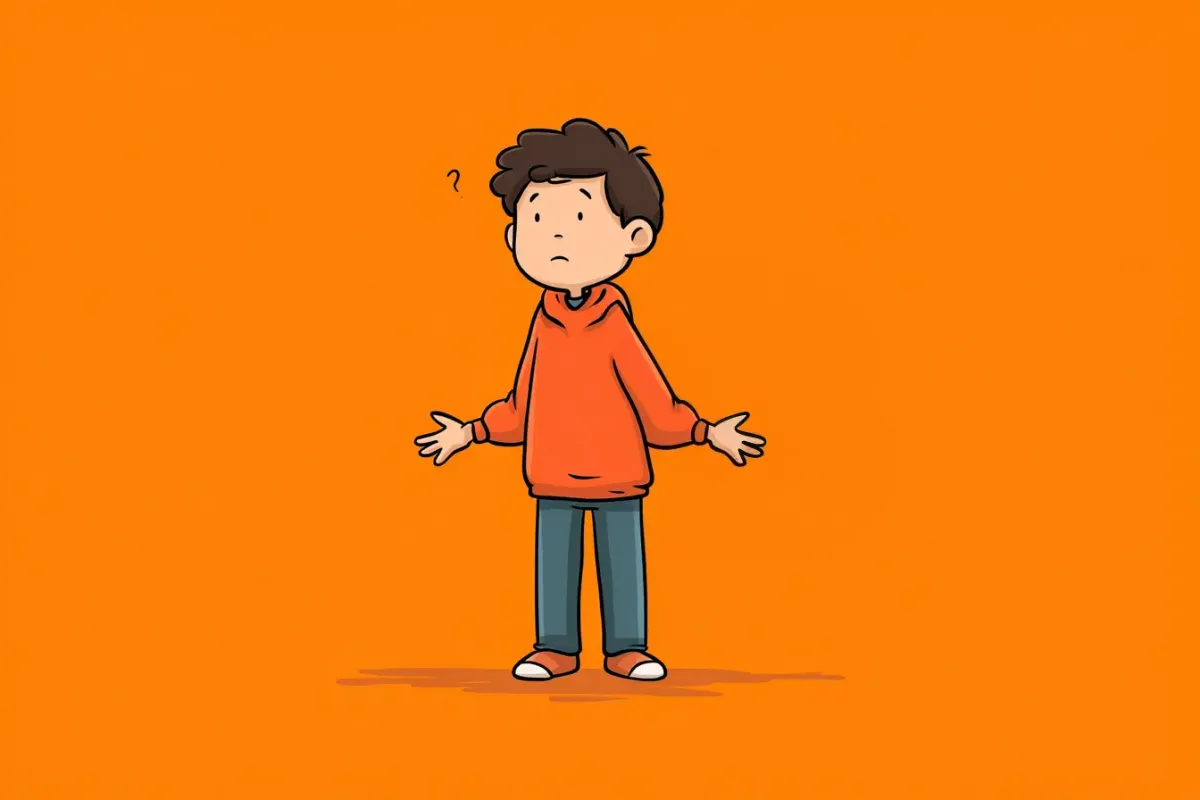
In real English, uncertainty almost never sounds neutral. Native speakers usually adjust how they express not knowing something depending on their confidence, context, mood, and social distance.
Learners usually rely on "I don't know" in English because it’s clear and correct. But native speakers have many more variations! Let’s dive into them!
Quick Recap Table
When You Truly Have No Information at All
Even total ignorance is usually phrased gently. English speakers avoid sounding abrupt unless they mean to. These phrases are often used to soften the statement. Some sound neutral (I’m not sure), others slightly apologetic (I’m afraid I don’t know), and some emphasize sincerity (I honestly don’t know).
Here are some very common choices:
- I’m not sure.
- I honestly don’t know.
- I really have no idea.
- I don’t know anything about that.
- I haven’t a clue.
- I’m afraid I don’t know.
- I wouldn’t know.
- That’s not something I know much about.
When You Have Partial or Uncertain Information
This is one of the richest categories in English. Speakers love signaling “maybe” instead of “no.” These phrases protect the speaker socially. If the information turns out to be wrong, the uncertainty was already built in.
Common patterns you’ll hear:
- I think so, but I’m not certain.
- I’m not entirely sure.
- I could be wrong, but…
- From what I remember…
- As far as I know…
- Last I heard…
- To the best of my knowledge…
- I’ve heard something like that.
- If I remember correctly…
- I believe so, yes.
When You Don’t Want to Commit or Take Responsibility
Sometimes “not knowing” is strategic. Native speakers distance themselves politely instead of refusing directly.
Typical expressions:
- That’s hard to say.
- It depends.
- I couldn’t really say.
- I’m not in a position to say.
- I’m not sure I can answer that.
- That’s not really my call.
- I don’t want to speculate.
- I don’t have enough information to say.
When You’re Thinking, Remembering, or Processing
English allows uncertainty in motion. You don’t need an answer before you speak.
Natural thinking phrases include:
- Let me think…
- Give me a second…
- I’m trying to remember…
- That’s a good question.
- Hmm, I’m not sure yet.
- I need to think about that.
- I’ll have to think about that.
- I’m drawing a blank.
When You Want to Sound Casual, Relaxed, or Playful
In informal speech, people often use these very common casual options:
- No idea.
- No clue.
- Beats me.
- Who knows?
- I haven’t got the slightest idea.
- Search me.
- Don’t ask me.
- Your guess is as good as mine.
These synonyms of “I don’t know” are a social tool. English speakers use these phrases to sound thoughtful, polite, collaborative, or relaxed. Saying the same thing in different ways sometimes can change the tone of the whole conversation.
FAQ
What to say instead of “I don’t know”?
Instead of saying “I don’t know,” you can use phrases that show thought, openness, or willingness to help. For example, “I’m not sure yet, but I can look into it,” or “I don’t have the full answer right now.” These alternatives sound more engaged and signal that the conversation is still moving forward.
What to say when you don’t know what to say?
When you’re stuck and genuinely don’t know how to respond, it’s okay to be honest in a softer way. You can say, “Let me think about that for a moment,” or “That’s a good question, I need a second to process it.” These phrases buy you time and feel natural in conversation. They also show that you’re taking the other person seriously instead of defaulting to silence or an awkward filler.
How to say “I don’t know” in a professional way?
In professional settings, the goal is clarity without sounding careless or dismissive. Saying “I don’t have the answer at the moment, but I’ll follow up,” or “I’ll need to verify that to be sure,” sounds responsible and proactive. These expressions show accountability and signal next steps, which is especially important at work.